My photo
An expert in teaching creative children and helping parents understand their creative child, Catherine coaches parents, and works with students of all ages, teaching music and the piano, along with several other instruments. Creative people see the world and every aspect of the world differently from other people. As children we don't know we are doing that. Unfortunately parents think that their child is just being difficult. It wasn't until Catherine was in her 40s that she realized she WAS creative and that that was why she never really 'fit' in with what everyone else was saying or thinking or feeling. Since then she has been taking her experiences and helping others to understand what they are going through.

Monday, March 21, 2011

Are you looking for something for your child to do this summer?
How about learning how to play the piano?

"It has been noted that music can have a very positive affect on a child's personal development. Music helps to teach children crucial skills that have a postive impact on their lives. Studies have shown that children who learn music have better pitch. Better pitch will often help children to learn languages much easier." - www.sovietrussia.co.uk/music-can-help-children-learn-a-new-language/

"A research team exploring the link between music and intelligence reported that music training is far superior to computer instruction in dramatically enhancing children's abstract reasoning skills, the skills necessary for learning math and science."

"Research shows when a child listens to classical music the right hemisphere of the brain is activated, but when a child studies a musical instrument both left and right hemispheres of the brain "light up". Significantly, the areas that become activated are the same areas that are involved in analytical and mathematical thinking." - Dee Dickinson, "Music and the Mind," New Horizons for Learning, 1993.

Piano Lessons with Catherine!
Sign Up Today!!!
These lessons are given using SKYPE.


If you have any questions about teaching music or about learning music please email me at: Catherines.Music.Notes@gmail.com

Have a Musical Day!!! *Smiles*


Catherine
"Music lessons should be about the student. Each student learns in different ways, and at different speeds. Music is a journey, and on that journey we will work and learn together." - Catherine

Books with CDs included:
Impressions Volume One, Two, and Three
Marches
The Frog Prince
Reading Music, Middle C, D, and E
CDs include:
Wedding Bells
Lullabies

http://sites.google.com/site/musicbycatherine
www.ShoutLife.com/ClassyKeys
http://catherinesmusicnotes.blogspot.com

Monday, March 14, 2011

Discovery

Saint Patrick was born in the 4th. century. He used the shamrock to teach about the Holy Trinity. He died March 17, 461. As early as the 17th century people wore shamrocks to celebrate Saint Patrick's Day.

Answer the two questions. See if you get the answers right. The answers are at the bottom of the page.

1. True or False. The "wearing of the green" means to wear a shamrock on one's clothing.

2. True or False. Originally the color that everyone associated with Saint Patrick was blue.

Write a poem or song about Saint Patrick, or a Shamrock, or the color green. I'd love to hear what you wrote. Please send it to me at Catherines.Music.Notes@gmail.com

If you have any questions about teaching music or about learning music please email me at: Catherines.Music.Notes@gmail.com

Have a Musical Day! *smiles*
Happy Saint Patrick's Day!


Catherine
"Music lessons should be about the student. Each student learns in different ways, and at different speeds. Music is a journey, and on that journey we will work and learn together." - Catherine

Books with CDs included:
Impressions Volume One, Two, and Three
Marches
The Frog Prince
CDs include:
Wedding Bells
Lullabies

http://sites.google.com/site/musicbycatherine
www.ShoutLife.com/ClassyKeys
http://catherinesmusicnotes.blogspot.com

Answers:
1. True.
2. True
.

Tuesday, March 8, 2011

Preschool, Toddlers, and Babies

Today let's make believe!!!

Have your child or children perform each activity after you describe it. Of course, it's fun if you do the activity also.

1. You are the rain.
(click here for the rain song to move to)
2. You are a snowflake.
(click here for the snowflake song to move to)
3. You are leaves falling from the tree.
(click here for the leaves falling song to move to)

If you have any questions about teaching music or about learning music please email me at: Catherines.Music.Notes@gmail.com

Have A Musical Day!!! *smiles*

Catherine
"Music lessons should be about the student. Each student learns in different ways, and at different speeds. Music is a journey, and on that journey we will work and learn together." - Catherine

Books with CDs included:
Impressions Volume One, Two, and Three
Marches
The Frog Prince
CDs include:
Wedding Bells
Lullabies

http://sites.google.com/site/musicbycatherine

www.ShoutLife.com/ClassyKeys

http://catherinesmusicnotes.blogspot.com/

Monday, February 28, 2011

Just A Little Reminder

These are things you should have already noticed while reading my blogs. You can find the answers to these questions by looking through my past blogs, or just look at the bottom of this page.

1. True or False. Music is sometimes loud and sometimes soft.

2. What is A capella?
3. True or False. The more you practice on your instrument the better you become.

4. What is tessitura?

5. What is tempo?

6. Can learning a musical instrument improve grades in school?

7. Does taking piano lessons help with SAT scores?

8. Who was Richard Wagner?

9. Name some musical instrument that make high sounds. Name some musical instruments that make low sounds. 10. When singing, should you ever 'belt it out'?

If you have any questions about teaching music or about learning music please email me at: Catherines.Music.Notes@gmail.com


Have a Musical Day!!! *Smiles*

Catherine
"Music lessons should be about the student. Each student learns in different ways, and at different speeds. Music is a journey, and on that journey we will work and learn together." - Catherine

Books with CDs included:
Impressions Volume One, Two, and Three
Marches
The Frog Prince
CDs include:
Wedding Bells
Lullabies

http://sites.google.com/site/musicbycatherine

www.ShoutLife.com/ClassyKeys

http://catherinesmusicnotes.blogspot.com/


Answers:
1. True
2. A cappella music is music sung without any accompaniment.
3. True
4. Tessitura is the range in which a given voice has it's best timbre and texture.
5. Tempo in music is the speed of a composition. The tempo is measured according to beats per minute.
6. Yes. Studies have linked active music making with better language and math ability, improved school grade, better-adjusted social behavior, and improvments in "spatial-temporal reasoning". - American Music Conference, 2001.
7. Yes. There is a direct correlation between improved SAT scores and the length of time spent studying the arts. College-bound senior who'd had music experience scored 52 points higher on the verbal portion of their SATs and 37 point higher in math, than those without arts instruction. - Profiles of SAT and Achievement Test Takers, The College Board, 1998.
8. Richard Wagner, a German composer was born May 22, 1813. He was the court composer for King Ludwig of Bavaria. You can see frescoes of his opera on the wall of Neuschwanstein Castle. This is the castle Disney copied for the Disney Castle.
9. High sounds - recorders, flutes, piccolos. Low sounds - bass fiddle, tuba.
10. Absolutely NO! It can ruin your voice and vocal chords.

Monday, February 21, 2011

Questions and Answers

This week's question is:
What are the different types of voices called in singing?

A high woman's voice is soprano. The medium is mezzo-soprano. And the low woman's voice is called alto.

The high man's voice is tenor. The medium is baritone. And the low man's voice is bass.

If you have any questions about teaching music or about learning music please email me at: Catherines.Music.Notes@gmail.com


Have a Musical Day!!! *smiles*

Catherine
"Music lessons should be about the student. Each student learns in different ways, and at different speeds. Music is a journey, and on that journey we will work and learn together." - Catherine

Books with CDs included:
Impressions Volume One, Two, and Three
Marches
The Frog Prince
CDs include:
Wedding Bells
Lullabies

http://sites.google.com/site/musicbycatherine

www.ShoutLife.com/ClassyKeys
http://catherinesmusicnotes.blogspot.com/

Monday, February 14, 2011

Discovery Page


Happy Valentine's Day!

1. True or False. Valentine's Day is associated with the mutual exchange of love notes.

2. True or False. Valentine's Day is the third largest card-sending holiday of the year.

Interesting Fact:
Using the language of the law courts for rituals of courtly love, a "High Court of Love" was established in Paris on Valentaine's Day in 1400. The court dealt with love contracts, betrayals, and violence against women. Judges were selected by women on the basis of a poetry reading. -- Wikipedia, the free encycolpedia, "Valentine's Day".

Today write a poem about love and put it to music. If you would like to share it send it to me. I'll put some of the songs on this blog. Send to: Catherines.Music.Notes@gmail.com


If you have any questions about teaching music or about learning music please email me at: Catherines.Music.Notes@gmail.com

Have a Musical Day!!! *smiles*

Catherine
"Music lessons should be about the student. Each student learns in different ways, and at different speeds. Music is a journey, and on that journey we will work and learn together." - Catherine

Books with CDs included:
Impressions Volume One, Two, and Three
Marches
The Frog Prince
CDs include:
Wedding Bells
Lullabies

http://sites.google.com/site/musicbycatherine
www.ShoutLife.com/ClassyKeys
http://catherinesmusicnotes.blogspot.com


Answers:
1. True.
2. False. Valentine's Day is the second largest card-sending holiday of the year, behind Christmas. Approximately one billion Valentine's are sent each year worldwide.

Monday, February 7, 2011

Preschoolers, Toddlers, and Babies

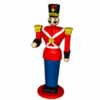
Let's be rag dolls and wooden soldiers today.

To the song below, have your child or children move around like floppy rag dolls. This is a very relaxed movement.

(click here for the floppy rag doll song)

Next have your child or children move around like stiff wooden soldiers to the song below. This is a tense movement. Remind them to walk straight and tall.

(click here for the stiff wooden soldiers song)

These musical exercises teach the children about contrast in movements.


If you have any questions about teaching music or about learning music please email me at: Catherines.Music.Notes@gmail.com


Have a Musical Day!!! *smiles*


Catherine
"Music lessons should be about the student. Each student learns in different ways, and at different speeds. Music is a journey, and on that journey we will work and learn together." - Catherine


Books with CDs included:
Impressions Volume One, Two, and Three
Marches
The Frog Prince
CDs include:
Wedding Bells
Lullabies

http://sites.google.com/site/musicbycatherine

Monday, January 31, 2011

The Musical Staff


The staff is made up of five lines and four spaces. The notes are written on the lines and spaces. The pitches are named, A, B, C, D, E, F, G.

A phrase is a complete musical thought. Just like a sentence is a complete spoken thought.

Think of someone with a one-syllable name. Say their name four time as you clap quarter notes.
Can you find the quarter notes in the song below?
(Click here for the sheet music)


If you have any questions about teaching music or about learning music please email me at: Catherines.Music.Notes@gmail.com

Have a Musical Day!!! *smiles*

Catherine
"Music lessons should be about the student. Each student learns in different ways, and at different speeds. Music is a journey, and on that journey we will work and learn together." - Catherine

Books with CDs included:
Impressions Volume One, Two, and Three
Marches
The Frog Prince
CDs include:
Wedding Bells
Lullabies

http://sites.google.com/site/musicbycatherine
www.ShoutLife.com/ClassyKeys
http://catherinesmusicnotes.blogspot.com

Monday, January 24, 2011

Musical Form


Music has melody, rhythm, and harmony. These are the three main elements of music.

Music also needs form. Form is what organizes and structures music. Much of music is written in the ABA form. This is also known as ternary form. People like the idea of hearing a section, leaving that section, and then returning to that section.

Let's take "Twinkle, Twinkle Little Star" as an example. The first section and the last section are the same. The middle section is different.

(click here to listen to "Twinkle, Twinkle Little Star")
(click here to see the music of "Twinkle, Twinkle Little Star")

Exercise:
Write a short song in the ABA form. If you would like to share it with me, please send it to me at Catherines.Music.Notes@gmail.com


If you have any questions about teaching music or about learning music please email me at: Catherines.Music.Notes@gmail.com


Have a Musical Day! *smiles*


Catherine
"Music lessons should be about the student. Each student learns in different ways, and at different speeds. Music is a journey, and on that journey we will work and learn together." - Catherine

Books with CDs included:
Impressions Volume One, Two, and Three
Marches
The Frog Prince
CDs include:
Wedding Bells
Lullabies

http://sites.google.com/site/musicbycatherine

www.ShoutLife.com/ClassyKeys
http://catherinesmusicnotes.blogspot.com/


Thursday, January 20, 2011

Questions and Answers


1. What is a Shantey?

Shanties were the work songs sung aboard sailing ships. There are different types of shanties. Each has it's own rhythm and goes with a certain job on board a ship. On larger ships there would be a shanteyman, a singer hired for his huge voice and his ability to make up verses for songs. Each verse he made up would further help getting the work done.

A well-known Shantey is the song "Rio Grande".

(Click here to listen to the melody.)


Suggestions:

1. Think of adjectives to describe how a shantey might be sung.

2. What musical instruments might be used to help get the work done?

3. Write and play a percussion pattern that would work with this song.


If you have a question you would like me to answer about learning music please email me at Catherines.Music.Notes@gmail.com


Have a Musical Day!!! *smiles*

Catherine
"Music lessons should be about the student. Each student learns in different ways, and at different speeds. Music is a journey, and on that journey, we will work and learn together." - Catherine

Books with CDs include:
Impressions Volume One, Two, and Three
Marches

The Frog Prince
CDs include:
Wedding Bells
Lullabies

http://sites.google.com/site/musicbycatherine
www.ShoutLife.com/ClassyKeys
http://catherinesmusicnotes.blogspot.com


Monday, January 10, 2011

Discovery Page:

Find out the answers to these questions and then see how many of your family and friends know the answers. The answer are at the bottom of the page.

1. True or False. All cultures that measure yearly calendars have New Year celebrations.

2. In Jewish tradition, what is the symbol for the new year -- Rosh Hashana?

3. The Chinese New Year is also known as what?


The Song: "Auld Lang Syne"

"Auld Lang Syne" is usually sung each year at midnight on New Year's Eve in most English speaking countries. It signifies the start of a new year.

"Auld Land Syne" is a Scottish poem written by Robert Burns in 1788. It was set to a traditional folk song. It is not known if the tune we now sing is the original tune that Burns used. The tune to which "Auld Land Syne" is sung is pentatonic.

Literally translated "auld land syne" means "old long since".

Some Interesting Facts:

Billy Joel sang and released Auld Lang Syne in his live CD titled "2000 Years - The Millenium".

Bobby Darin recorded a Christmas version in 1960.

In George M. Cohan's song "You're A Grand Old Flag", the first line "Should auld acquaintance be forgot": is part of the original song's chorus.

"Dick Clark's New Years Rockin Eve" uses Auld Lang Syne as it's 'theme' song.

If you have a question you would like me to answer about learning music please email me at Catherines.Music.Notes@gmail.com

Have A Musical Day!!! *smiles*

Catherine
"Music lessons should be about the student. Each student learns in different ways, and at different speeds. Music is a journey, and on that journey, we will work and learn together." - Catherine

Books with CDs include:
Impressions Volume One, Two, and Three
Marches
The Frog Prince
CDs include:
Wedding Bells
Lullabies

http://sites.google.com/site/musicbycatherine
www.ShoutLife.com/ClassyKeys
http://catherinesmusicnotes.blogspot.com


Answers:
1. True.
2. In Jewish tradition, honey is a symbol for the new year -- Rosh Hashana. At the traditional meal for that holiday apple slices are dipped in honey and eaten to bring a sweet new year. Some Rosh Hashana greetings show honey and an apple, symbolizing the feast.
3. The Chinese New Year, also known as the Luna New Year, occurs every year on the New Moon of the first lunar month, about four to eight weeks before spring.

Monday, January 3, 2011


Preschoolers, Toddlers, and Babies

Pat, Walk, and Play the Beat. The even, steady beat of the song is usually the quarter note. Listen to the song below and pat the steady beat that your hear. Then clap the steady beat that you hear. Then walk to the steady beat that you hear. If you have rhythm instruments use them to play the steady beat of songs during the week.

Practice drawing the quarter note.

If you have a question about music or music lessons that you would like me to answer, please email me at Catherines.Music.Notes@gmail.com I'd love to hear from you!

Have a Musical Day!!! *smiles*

Catherine
"Music lessons should be about the student. Each student learns in different ways, and at different speeds. Music is a journey, and on that journey, we will work and learn together." - Catherine

Books with CDs include:
Impressions Volume One, Two, and Three
Marches
The Frog Prince
CDs include:
Wedding Bells
Lullabies

http://sites.google.com/site/musicbycatherine
www.ShoutLife.com/ClassyKeys
http://catherinesmusicnotes.blogspot.com

Monday, December 27, 2010

The Nutcracker

Some of Tchaikovsky's most popular music is found in "The Nutcracker". I'm sure you have heard of "The Waltz of the Flowers," and "Dance of the Sugar Plum Fairy." This ballet's music is of the Romantic Period of music.

Tchaikovsky discovered the celestra in Paris, and used this instrument as the main instruments in the "Dance of the Sugar Plum Fairy". He wanted the Sugar Plum Fairy to have a 'heavenly sweet sound'. The celestra gave her that sound.

An interesting fact is that the original suite was only 85 minutes long.

The story of "The Nutcracker" revolved around a German girl named Clara. The Ballet opens with a brief overture. By using the upper registers of the orchestra the music set the fairy mood. The curtain opens to reveal the house, where a Christmas Eve party is under way...

Suggestions:
Watch a performance of "The Nutcracker".
Learn to play one of the pieces in this suite.
Read about Pyotr Llyich Tchaikovsky.
Learn about the Romantic Period of music.


If you have a question you would like me to answer about learning music please email me at Catherines.Music.Notes@gmail.com

Have a Musical and Happy New Year!!! *smiles*

Catherine
"Music lessons should be about the student. Each student learns in different ways, and at different speeds. Music is a journey, and on that journey, we will work and learn together." - Catherine

Books with CDs include:
Impressions Volume One, Two, and Three

Marches
The Frog Prince
CDs include:
Wedding Bells
Lullabies

http://sites.google.com/site/musicbycatherine
www.ShoutLife.com/ClassyKeys
http://catherinesmusicnotes.blogspot.com


Monday, December 20, 2010

A Bit Of
The History of Christmas Music

Music has always been a part of the Christmas Season. Chants, Litanies, and hymns were written in Latin and used during the church liturgy. In the 13th Century carols were written in the vernacular. There were influenced by Francis of Assisi.

The word carol comes from the Greek word 'choraulein', meaning a circle dance performed to flute music. In the Middle Ages, the English combined circle dances with singing and called them carols. The word carol soon came to mean a song in which a religious topic is treated in a style that is familiar or festive.

In England the Puritans looked at the singing of Christmas carols as pagan. They had it banned. After the Restoration began the tradition of singing Christmas carols in return for alms or charity. This was in the seventeenth century. Town musicians were licensed to collect money in the streets in the weeks preceeding Christmas. Also started in the seventeenth century was the taking of a 'wassail bowl' round their neighbors to solicit gifts, accompanied by carols.

Christmas music has been a combination of sacred and secular.

The most performed Christmas songs are:
1. The Christmas Song (Chestnuts Roasting on an Open Fire) - Mel Torme, Robert Wells.
2. Santa Claus is Coming To Town - Fred Coots, Haven Gillespie.
3. Have Yourself a Merry Little Christmas - Ralph Blane, Hugh Martin.
4. Winter Wonderland - Feliz Bernard, Richard B. Smith.
5. White Christmas - Irving Berlin.

Please listen and watch two of my students as they play on the keyboards "We Three Kings".


If you have a question you would like me to answer about learning music please email me at Catherines.Music.Notes@gmail.com


Have a Musical and Merry Christmas!!! *smiles*


Catherine
"Music lessons should be about the student. Each student learns in different ways, and at different speeds. Music is a journey, and on that journey, we will work and learn together." - Catherine

Books with CDs include:
Impressions Volume One, Two, and Three
Marches
The Frog Prince
CDs include:
Wedding Bells
Lullabies

http://sites.google.com/site/musicbycatherine
www.ShoutLife.com/ClassyKeys
http://catherinesmusicnotes.blogspot.com/


Monday, December 13, 2010


Discovery Page

Find out the answer to these questions and then see how many of your family and friends know the answers. The answers are at the bottom of this page.


1. What are the names of Santa's Reindeer?
Eight of the names are taken from Clement C. Moores, "A Visit From St. Nicholas". The Ninth is taken from the song, "Rudolf, The Red Nosed Reindeer".

2. True or False. England only had 7 white Christmas' in the Twentieth Century.

3. True or False. Maoz Tzur is also known as "Rock of Ages".

4. What is Hannukkah (Chanukkah)?


The Story of "Silent Night"

On Christmas Eve in the year 1818 the song "Silent Night" was performed for the first time. The words were written by Joseph Mohr. He asked Franz Xavier Gruber to write music to go with the words. This song was first performed at St. Nikolas Church in Oberndorf, with Franz at the organ and Father Jospeh on the guitar.


Each year, this beautiful Christmas song is performed in this tiny church. Thousand of people stand inside and outside St. Nikolas Church to be a part of this wonderful Christmas story.

If you have a question you would like me to answer about learning music please email me at Catherines.Music.Notes@gmail.com

Have a Musical Day!!!
Happy Holidays!!!

Catherine
"Music lessons should be about the student. Each student learns in different ways, and at different speeds. Music is a journey, and on that journey, we will work and learn together." - Catherine


Books with CDs include:
Impressions Volume One, Two, and Three
Marches

The Frog Prince
CDs include:
Wedding Bells
Lullabies

http://sites.google.com/site/musicbycatherine
www.ShoutLife.com/ClassyKeys (over 18,000 views and 4000 friends)
http://catherinesmusicnotes.blogspot.com


Answers:
1. Dasher, Dancer, Prancer, Vixen, Comet, Cupid, Donner, Blitzen, and Rudolf.
2. True.
3. True. Maoz Tzur is sung after the lightning of the candles. It is also known as "Rock of Ages" and was written hundreds of years ago in Europe.
4. It is an 8 day festival commemorating the victory of the Maccabees over Antiochus Epiphanes and the rededication of the Temple in Jerusalem.


Monday, December 6, 2010

Jingle Bells

Jingle Bells was written between 1850 and 1857 by James Pierpont. It is not known for sure how the song or why the song was written but it is believed that it was written in the town of Medford, MA. During the winter there were sleigh races through the center of town. As the sleighs sped along their route, townspeople braved the cold and cheered on the drivers, sometimes singing carols and other songs.

A fun activity with your child is to play the bells and sing songs such as "Jingle Bells", "We Wish You A Merry Christmas", and "Sleigh Ride". This activity will help with rhythm and coordination. Keep your child safe. Make sure your child can not swallow the jingle bells or put them around their neck. You can buy a jingle bell instrument from a music store. Also, there are many websites that show you how to make a jingle bell instrument. There are also huge jingle bells that can not fit in a child's mouth that you might consider. These make a deep, rich sound.

Remember to have a safe and happy holiday!!!


If you have a question you would like me to answer about learning music please email me at Catherines.Music.Notes@gmail.com

Have a Musical Day!!! *Smiles*


Catherine
"Music lessons should be about the student. Each student learns in different ways, and at different speeds. Music is a journey, and on that journey, we will work and learn together." - Catherine

Books with CDs include:
Impressions Volume One, Two, and Three
Marches The Frog Prince
CDs include:
Wedding Bells
Lullabies

http://sites.google.com/site/musicbycatherine

www.ShoutLife.com/ClassyKeys

http://catherinesmusicnotes.blogspot.com

Monday, November 29, 2010


Young Children Composing Music


I teach some of my piano students at a preschool. Today I would like to introduce some of them to you. There is Ryan, who is always smiling. He just turned 3 years old. Then there is Wilmans who loves to fish and has a heart of gold. Akshaj loves to laugh. Wilmans and Akshaj are good buddies at school.

I also teach two preschoolers in my studio. Christian is very curious and wants to learn about everything. And Ryan, he is shy and quiet. He observes what is going on around him and thinks about it.

One thing they all share is their love of learning and their love of music. In order to teach them about music I had each one them compose a song. By writing these song they learned about and felt the rhythms of the whole note, half notes, and quarter notes.


You can listen to their first songs by clicking beside the song name:

Akshaj's Song (click here)
Christian's Super Awesome Song (click here)
Macaroni and Cheese (click here)
The Lion's Song (click here)
Wilmans' Song (click here)
Wilmans found the pitch bar and used it as I recorded his song.


If you have a question you would like me to answer about learning music please email me at Catherines.Music.Notes@gmail.com

Happy Holidays!!!

Catherine
"Music lessons should be about the student. Each student learns in different ways, and at different speeds. Music is a journey, and on that journey, we will work and learn together." - Catherine


Books with CDs include:
Impressions Volume One, Two, and Three
Marches
The Frog Prince
CDs include:
Wedding Bells
Lullabies


Monday, November 22, 2010

The Key of C Major


The key of C Major has a happy sound. All major keys are happy in sound. C Major has no sharps or flats in its key signature. C is the root. The C chord is the most important chord in the Key of C Major. Write out the musical notes from C to C: C D E F G A B C. That is the C Major Scale. To play it on the piano with your right hand you would start with your thumb which is called the first finger, D would get your pointer finger, E would get your third (middle) finger, then you would put your thumb under the third finger and F would get your thumb, followed by your second finger on G, third finger on A, fourth finger (ring finger) on B, and your fifth (pinky) finger on high C.

The next more important chord in the Key of C Major is the G chord. That is because it is 5 notes above the root note. If you know the C and G chords only, you can play over 500 songs! A song usually starts on the root and ends on the root.


If you have a question you would like me to answer about learning music please email me at Catherines.Music.Notes@gmail.com


Have A Musical Day!!! *smiles*

Catherine
"Music lessons should be about the student. Each student learns in different ways, and at different speeds. Music is a journey, and on that journey, we will work and learn together." - Catherine

Books with CDs include:
Impressions Volume One, Two, and Three
Marches

The Frog Prince
CDs include:
Wedding Bells
Lullabies

http://sites.google.com/site/musicbycatherine
www.ShoutLife.com/ClassyKeys
http://catherinesmusicnotes.blogspot.com

Monday, November 15, 2010

Questions and Answers


1. Why is it important to learn music?
Learning music along with academics and sports helps to make you a well-rounded individual. Here are a few studies about how music helps:

Young children who take music lessons show different brain development and improved memory over the course of a year, compared to children who do not receive musical training. Musically trained children performed better in a memory test that is correlated with general intelligence skills such as literacy, verbal memory, visiospatial processing, mathematics, and IQ. - Dr. Laurel Trarinor, Prof. of Psychology, Neuroscience, and Behavior at McMaster University, 2006.

Playing a musical instrument significantly enhances the brain stem's sensitivity to speech sounds. This relates to encoding skills involved with music and language. Experience with music at a young age can "fine-tune" the brain's auditory system. - Nature Neuroscience, April 2007.

1997 - Researchers found that children given piano lessons improved much more dramatically in their spatial-temporal IQ scores (important for some types of mathematical reasoning) than children who received computer lessons or no lessons.

1997 - A research team exploring the link between music and intelligence reported that music training is far superior to computer instruction in dramatically enhancing children's abstract reasoning skills, the skills necessary for learning math and science.

A study with 69 children with autism, attention deficit disorder, and epilepsy showed that while they are exposed to music, (and in some cases, for significant periods afterwards), their social skills and concentration improved dramatically in almost all cases. A related study proved that after a year of piano lessons and music therapy, the seizures in 79% of epilepsy patients disappeared completely.

Music students out-perform non-music students on achievement tests in reading and math. Skills such as reading, anticipating, memory, listening, forecasting, recall, and concentration are developed in musical performance and these skills are valuable to students in math, reading, and science. - B. Friedman, "An Evaluation of the Achievement in Reading and Arithmetic of Pupils in Elementary School Instrument Music Classes, "Dissertation Abstracts Internationa."


If you have a question you would like me to answer about learning music please email me at Catherines.Music.Notes@gmail.com

Have a Musical Day!!! *smiles*


Catherine
"Music lessons should be about the student. Each student learns in different ways, and at different speeds. Music is a journey, and on that journey, we will work and learn together." - Catherine

Books with CDs include:
Impressions Volume One, Two, and Three
Marches

The Frog Prince
CDs include:
Wedding Bells
Lullabies

http://sites.google.com/site/musicbycatherine

www.ShoutLife.com/ClassyKeys
http://catherinesmusicnotes.blogspot.com/


Monday, November 8, 2010


Discovery Page


The most accepted story of the first Thanksgiving is that Thanksgiving took place in Plymouth Colony in what is now Massachusetts in 1621.

Find out the answer to these questions and then see how many of your family and friends know the answers. (The answers are at the bottom of this blog.)

1. According to the Guinness Book of World Records, what is the largest pumpkin pie ever baked?

2. The first Macy's Thanksgiving Day Parade took place in what year and in what city?

3. In what year did Congress (USA) finally make Thanksgiving Day an official national holiday?

Thought for the day: Do you think that music was played at the first Thanksgiving Feast? If so, what musical instruments did they use and what did the music sound like?

If you have a question you would like me to answer about learning music please email me at Catherines.Music.Notes@gmail.com

Have a Musical Day!!!

Catherine
"Music lessons should be about the student. Each student learns in different ways, and at different speeds. Music is a journey, and on that journey, we will work and learn together." - Catherine

Books with CDs include:
Impressions Volume One, Two, and Three
Marches
The Frog Prince
CDs include:
Wedding Bells
Lullabies

http://sites.google.com/site/musicbycatherine
www.ShoutLife.com/ClassyKeys
http://catherinesmusicnotes.blogspot.com


Answers:
1. The pumpking pie weighed 2,020 pounds and was just over 12 feet long.
2. The years was 1924 and it took place in New York City.
3. 1941.